The HTML <video> tag
The HTML <video> element embeds a video player. Add controls for the native UI, set the file with src (or several <source> elements), and provide captions with a <track>.
Overview
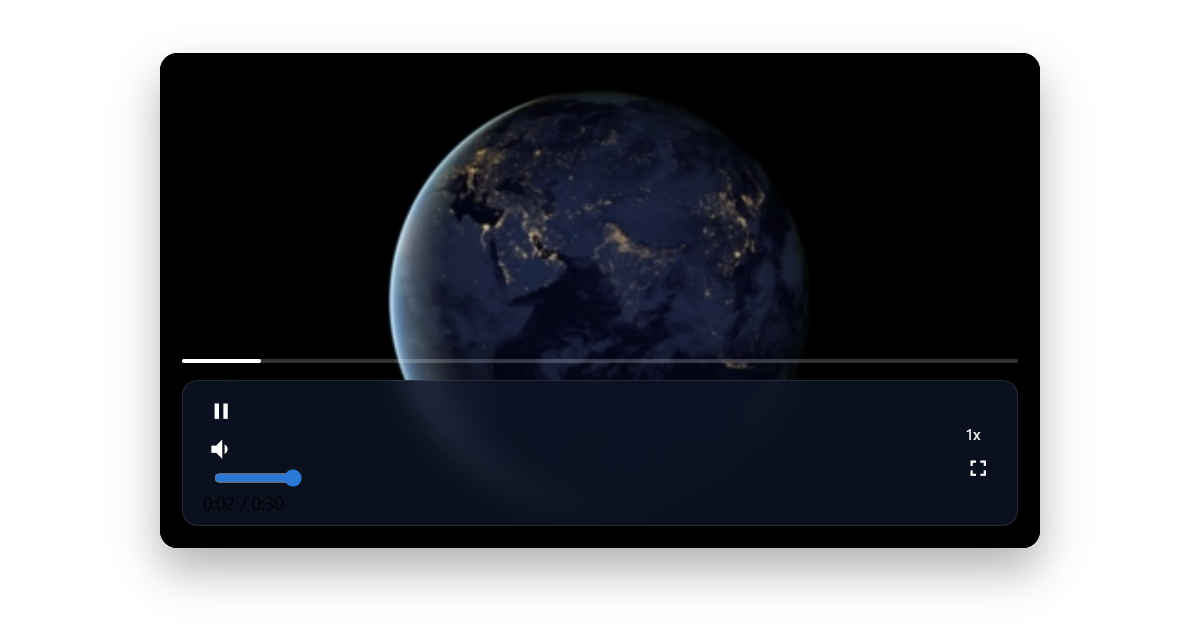
The <video> element plays video natively in the browser (no plugin required). Point it at a file with the src attribute, or nest several <source> elements so the browser can pick a format it supports. Add the controls attribute for the built-in player and a poster image to show before playback begins.
Autoplay is deliberately restricted. Browsers only allow a video to start on its own when it is also muted (and usually playsinline on mobile, so it does not jump to fullscreen). This is a deliberate guard against intrusive, noisy pages, so plan for a muted autoplay or a click-to-play experience rather than fighting it.
Accessibility is not optional here: always provide captions and subtitles through a <track> element so deaf and hard-of-hearing users get the speech and important sounds. Set width and height (or use the CSS aspect-ratio) so the player reserves space and the page does not jump as it loads.
Syntax
<video controls width="640" poster="cover.jpg">
  <source src="clip.webm" type="video/webm">
  <source src="clip.mp4" type="video/mp4">
  <track kind="captions" src="caps.vtt" srclang="en" label="English" default>
</video>
Attributes
The <video> element supports the following attributes, in addition to the global attributes available to every HTML element.
| Attribute | Value | Description |
|---|---|---|
autoplay |
A boolean attribute: present or absent. | Starts media playback automatically. |
controls |
A boolean attribute: present or absent. | Shows native media playback controls. |
crossorigin |
anonymous (default when present) use-credentials |
Sets the CORS mode for fetching the resource. |
height |
A non-negative integer (pixels). | Sets the height of the element in pixels. |
loop |
A boolean attribute: present or absent. | Replays media from the start when it ends. |
muted |
A boolean attribute: present or absent. | Mutes the media by default. |
playsinline |
A boolean attribute: present or absent. | Plays a video inline instead of fullscreen. |
poster |
A URL pointing to an image. | Sets a placeholder image for a video. |
preload |
none metadata auto |
Hints how much media to preload. |
src |
A URL pointing to the resource. | Specifies the URL of an embedded resource. |
width |
A non-negative integer (pixels). | Sets the width of the element in pixels. |
Example
<video controls width="320" poster="https://codeshack.io/web/img/icon.png" style="max-width:100%;background:#000;border-radius:6px;"></video>More Examples

Best practices
- Add the
controlsattribute so users can play, pause and seek. - Offer multiple formats with nested <source> elements for broad browser support.
- Always provide captions with a <track> element.
- For autoplay, the video must be
muted; set dimensions or aspect-ratio to prevent layout shift.
Accessibility
Frequently asked questions
How do I embed a video in HTML?
<video> with controls and either a src or nested <source> elements pointing at your video files.How do I autoplay a video?
autoplay muted (and usually playsinline on mobile). Browsers block autoplay with sound, so the video must be muted.Why is my video autoplay not working?
muted attribute.How do I add captions to a video?
kind="captions" pointing at a WebVTT file.






















