The HTML <select> tag
The HTML <select> element creates a drop-down list. It contains <option> elements (optionally grouped with <optgroup>), and the multiple attribute turns it into a multi-select list.
Overview
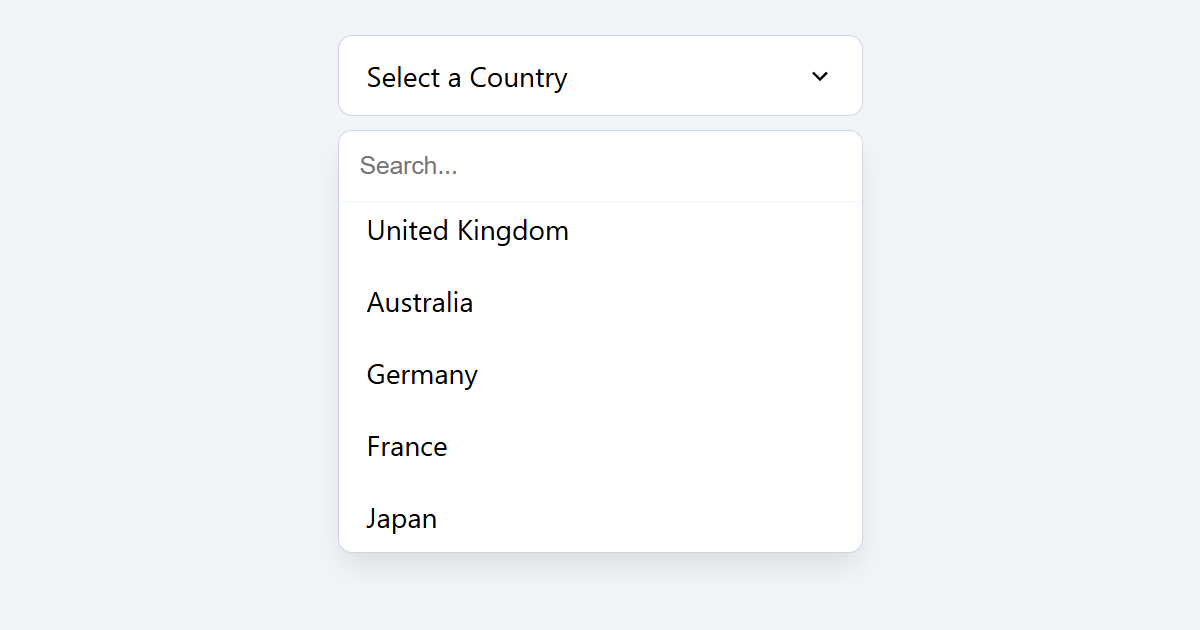
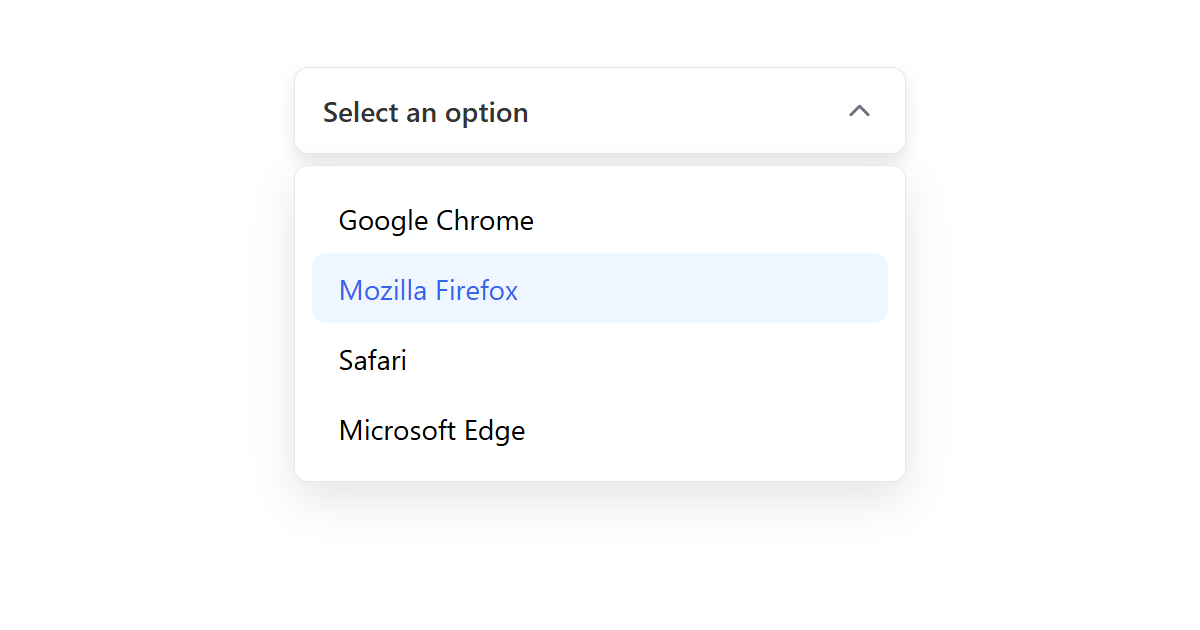
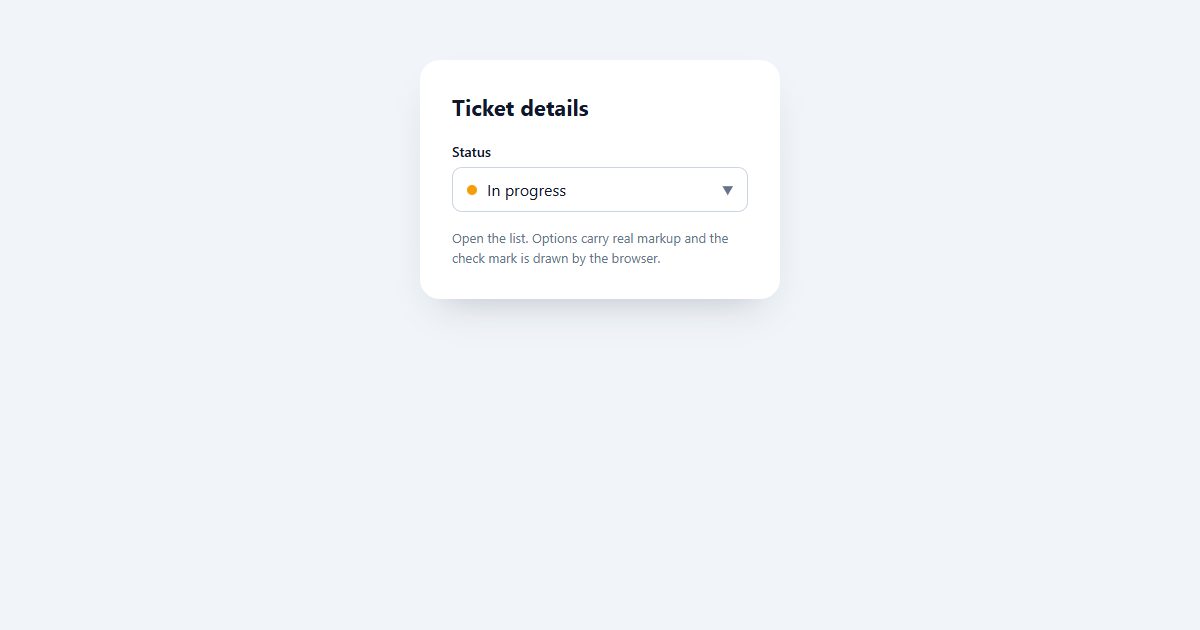
The <select> element presents a list of choices as a drop-down menu. Each choice is an <option>, and related options can be gathered under labeled <optgroup> headings to keep a long list organized.
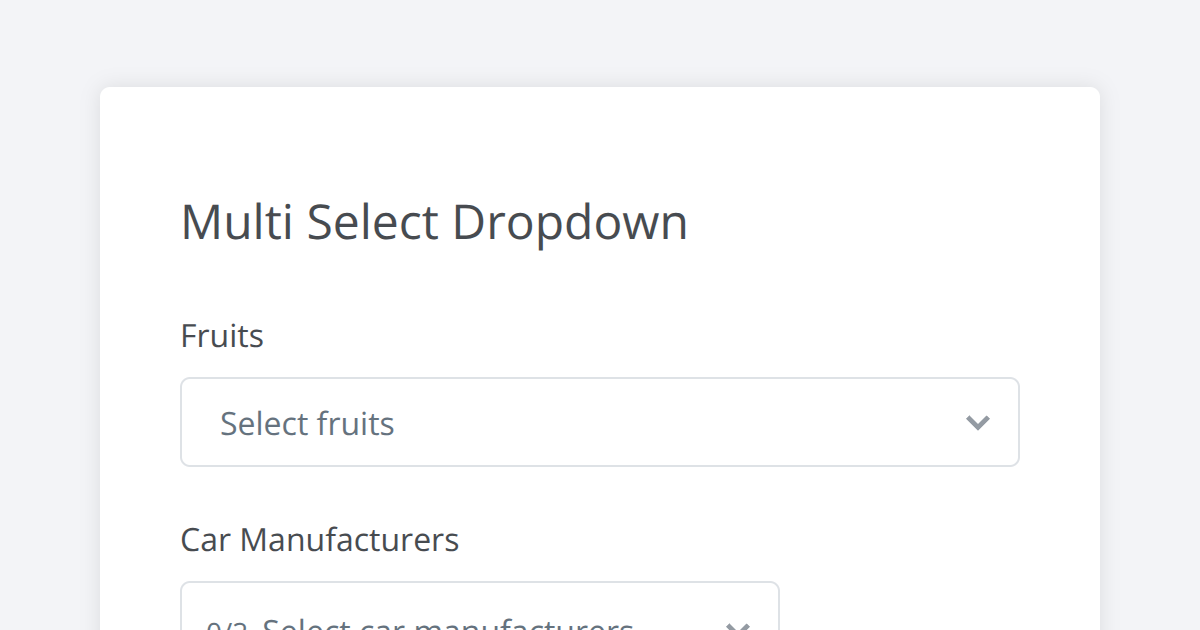
By default it shows a single-line drop-down, but the size attribute turns it into a scrolling list box, and multiple lets the user pick several options at once. The value that gets submitted is the selected option's value (or its visible text if it has none), and you mark a default choice with the selected attribute on the option.
Like every form control, a <select> needs a <label>. If you want to suggest values while still allowing free typing, an <input> with a <datalist> is the better fit than a <select>, which restricts the user to the listed options.
Syntax
<label for="c">Country</label>
<select id="c" name="country">
  <option value="uk">United Kingdom</option>
  <option value="us">United States</option>
</select>
Attributes
The <select> element supports the following attributes, in addition to the global attributes available to every HTML element.
| Attribute | Value | Description |
|---|---|---|
disabled |
A boolean attribute: present or absent. | Disables a form control. |
form |
The id of a <form> element. |
Associates a control with a form by id. |
multiple |
A boolean attribute: present or absent. | Allows multiple values or selections. |
name |
A string (the field name used in the submitted data). | Names a form control for submission. |
required |
A boolean attribute: present or absent. | Marks a form control as mandatory. |
size |
A positive integer. | Sets the visible size of the control. |
Example
<label for="f">Favorite fruit</label>
<select id="f" name="fruit">
  <optgroup label="Common">
    <option>Apple</option>
    <option selected>Banana</option>
  </optgroup>
  <optgroup label="Tropical">
    <option>Mango</option>
  </optgroup>
</select>
More Examples
Best practices
- Always pair a
<select>with a <label>. - Group long lists into labeled sections with <optgroup>.
- Mark the default choice with
selectedon the relevant <option>. - When users should be able to type a value not in the list, use an <input> with a <datalist> instead.
Frequently asked questions
How do I make a drop-down list in HTML?
How do I set a default selected option?
selected attribute to the <option> you want pre-chosen.How do I allow multiple selections?
multiple attribute. The control becomes a list box from which several options can be chosen.How do I style a select drop-down?
appearance: none and add your own styling, or use the modern customizable select features where supported.






















